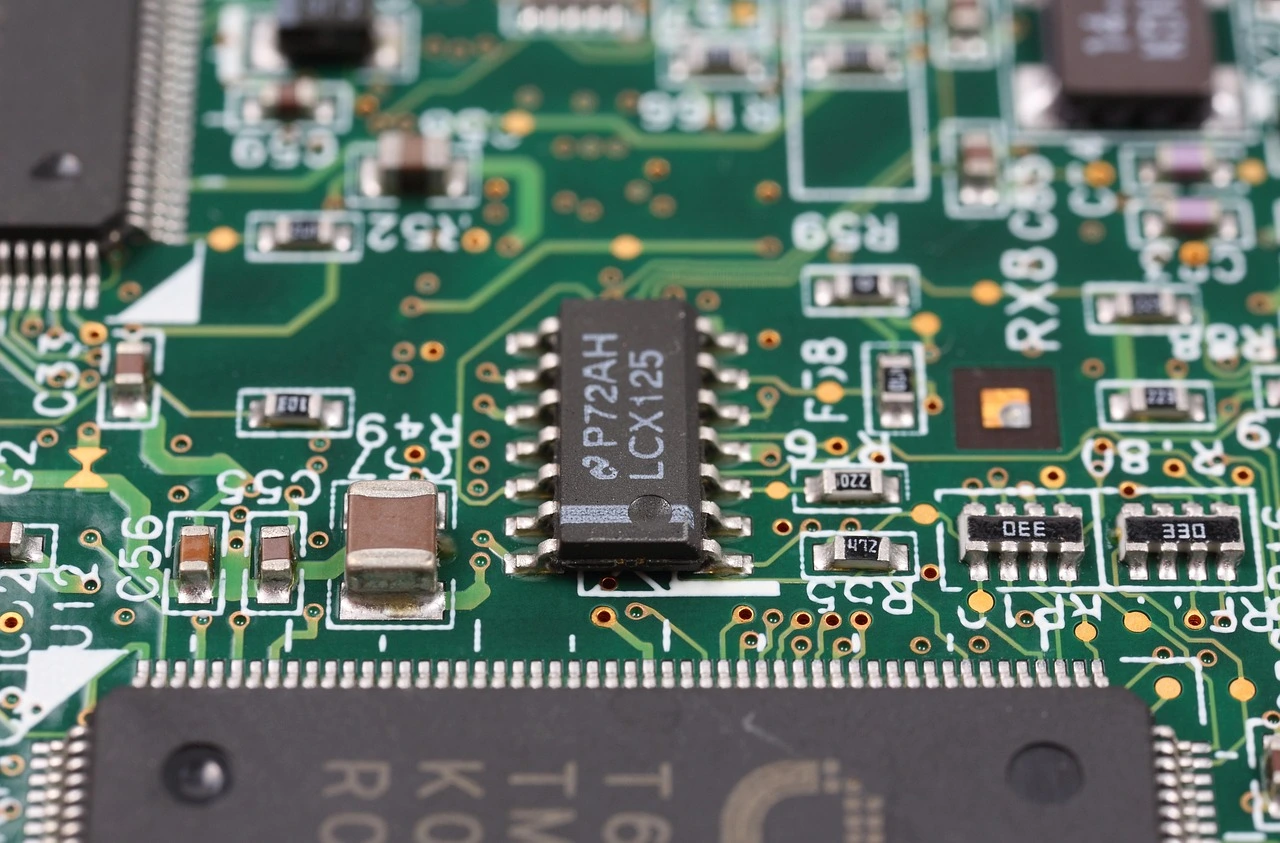
When you think about cybersecurity, what comes to mind? Probably phishing emails, malware, or zero-day exploits. But here’s the reality: hardware attacks are on the rise, and they’re exposing a critical blind spot. For years, organizations have focused on software (i.e patching vulnerabilities, deploying firewalls, and ticking compliance boxes). Meanwhile, the physical layer has been largely ignored. That oversight can be costly.
In a world where every device has become a vector of attack, organizations need to face the truth: hardware security is not optional, and it starts with a change of mindset. In this article, we’ll explore the stakes of hardware security and what it takes to take on this challenge.
The Cost of Overlooking Hardware as an Attack Vector
Hardware compromises can ripple through supply chains, infiltrate networks via trusted peripherals, and even undermine critical infrastructure. These attacks are dangerous because they bypass the very defenses we rely on.
Supply Chain Attacks: Hardware as the Weak Link
Modern supply chains are sprawling and complex, involving multiple vendors and manufacturing stages across the globe. This complexity creates opportunities for attackers to tamper with components before they ever reach the end user. Malicious implants, backdoors, or altered firmware can be introduced during production or distribution, giving adversaries persistent access that is nearly impossible to detect.
The complexity of hardware manufacturers’ supply chain expands the attacks surface for attackers. Magneto strategy perfectly illustrates this strategy in X-Men Days of Future Past [spoiler alert]: the villain, Task, plans to build metal-free Sentinel robots to eliminate mutants. When Magneto learns this, he intercepts a train carrying materials for the robots and infuses them with metal. This sets the stage for Magneto to later seize control of the Sentinels and turn them against Task.
In real life, we could talk about eavesdroppers using TTL to USB adapters to intercept sensitive data...or hackers implementing corrupted elements in a hardware component, just like Magneto did : in 2018, Bloomberg reported that tiny microchips were secretly embedded in Supermicro server motherboards during manufacturing, allegedly creating hidden backdoors into networks. This case exposed the massive risks posed by hardware-based supply chain attacks.
Critical Infrastructure: When Hardware Fails, Societies Suffer
Hardware vulnerabilities in sectors like healthcare, energy, and transportation can have catastrophic consequences. A single compromised device in a hospital network could disrupt patient care; a tampered sensor in an energy grid could trigger widespread outages.
Recent large-scale attacks, such as the 2024 DDoS assault on French state services that disrupted 300+ domains and 177,000 IP addresses, highlight how infrastructure weaknesses can scale rapidly. While this example was primarily network-based, it underscores the fragility of systems that rely on trusted hardware components. Regulatory frameworks like NIS2 in the EU are beginning to address these risks, but enforcement and adoption remain uneven.
The ripple effects of hardware failures extend beyond technical downtime—they erode public trust, destabilize economies, and, in some cases, threaten lives.
Invisible Threat: How Hardware Leaks Your Secrets
Hardware isn’t just a passive component—it can become an active accomplice in cyberattacks. Unlike software exploits, hardware-based attacks often operate below the radar, bypassing traditional defenses and leaving minimal forensic traces. Two major paths dominate this threat landscape: peripheral attacks and side-channel attacks.
Peripheral attacks: trust no device
Peripheral attacks exploit the implicit trust we place in everyday devices. USB drives, printers, external hard disks, even keyboards and mice are often assumed to be safe. This assumption makes them prime targets. A malicious USB stick can be reprogrammed to emulate a keyboard and inject harmful commands, a technique known as Bad USB. Attackers also rely on human curiosity by leaving infected USB sticks in public spaces, hoping someone will plug them in. More advanced threats hide deep within device firmware, as seen with tools like Rubber Ducky or Bash Bunny, which evade antivirus detection entirely. One of the most infamous examples, Stuxnet, leveraged infected USB drives to compromise SCADA systems in critical infrastructure, proving how devastating these attacks can be. Printers and scanners, often overlooked, can store sensitive documents or serve as gateways for network infiltration through firmware exploits. Even human interface devices like keyboards and mice can be hijacked to log keystrokes or inject commands, bypassing operating system security.
Side-channel attack: the inside ennemy
Side-channel attacks are even more insidious. Instead of breaking encryption directly, they extract secrets by analyzing indirect signals such as timing, power consumption, or electromagnetic emissions. Attackers monitor subtle variations in device behavior during cryptographic operations to infer keys or sensitive data. Vulnerabilities like Spectre and Meltdown revealed how speculative execution in modern CPUs could leak information across isolation boundaries, shaking the foundations of hardware security. Other techniques, such as power analysis have been used to compromise smart cards and IoT devices. These attacks are notoriously difficult to detect and mitigate because they exploit fundamental design principles rather than software flaws.
Securing the Hardware Ecosystem
If hardware can be weaponized, how do we defend against it? The answer lies in rethinking trust at the physical layer. For decades, security strategies have focused on software, leaving hardware as an assumed safe zone. That assumption no longer holds.
The challenge of hardware security
Regarding peripherals, organizations must adopt a “trust no device” mindset, treating every component—whether a USB stick or a processor—as a potential threat until proven otherwise. To do so, the traditional approach was to analyze the USB through a USB decontamination station (or sheep dip station as they say in UK) or a basic analysis with an antivirus.
One approach is to leverage Trusted Execution Environments (TEEs), which create secure zones within the main processor to protect sensitive operations. TEEs are designed to isolate code execution and safeguard cryptographic keys, offering end-to-end security even in hostile environments. However, TEEs they often come with degraded performance. The challenge of hardware is not only ensuring security but also finding the right balance between performance and security.
A wind of change for hardware protection
Hardware protections often introduce latency or complexity, which can conflict with business demands for speed and scalability. Emerging solutions aim to bridge this gap, combining hardware-level encryption with hardware-based isolation, to deliver both security and performance. At the same time, industry standards such as Common Criteria provide frameworks for evaluating and certifying hardware security, but adoption remains uneven across sectors.
Ultimately, securing the hardware ecosystem requires a layered approach: rigorous supply chain audits, continuous firmware integrity checks, and architectural designs that anticipate, not just react to future threats. Hardware security is no longer optional; it is foundational to resilience in a hyperconnected world.
Closing the Gap and Building Resilience Beyond Software
The lesson is clear: securing hardware is not optional. It requires a shift in mindset adopting a “trust no device” approach, enforcing rigorous supply chain audits, and integrating hardware security into compliance frameworks. Emerging technologies like Trusted Execution Environments and industry standards such as Common Criteria offer a starting point, but they are not silver bullets. Organizations must combine these tools with proactive monitoring and architectural resilience.
We understand this reality. That’s why we built a solution designed to eliminate attack vectors without compromising performance. Our technology enables multiple secure environments on a single PC, delivering both flexibility and uncompromising security for modern workloads.
Does it sound too good to be true? Let us show you how we do it.